Glass processing requires careful abrasive selection because the material is hard, brittle, and sensitive to localized stress. During grinding and finishing, an unsuitable abrasive or inconsistent sanding process may cause scratches, edge damage, or an uneven surface appearance.
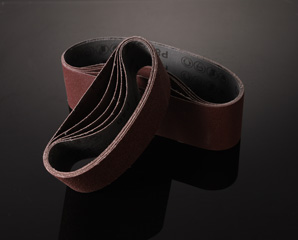
For manufacturers and industrial buyers, silicon carbide sanding belts for glass are worth considering because silicon carbide is a hard abrasive mineral commonly used in glass processing and other applications involving hard, brittle materials.
However, choosing a suitable abrasive belt involves more than selecting silicon carbide. Grit size, backing construction, belt dimensions, equipment compatibility, and the required surface finish all influence product suitability.
Understanding these factors helps glass processors and abrasive distributors make more informed purchasing decisions.
Silicon carbide is a synthetic abrasive mineral known for its high hardness and sharp cutting characteristics. These properties make it useful in applications involving glass, ceramics, stone, and selected non-ferrous materials.
Compared with aluminum oxide, silicon carbide has different fracture characteristics and abrasive behavior. Its hardness and cutting characteristics make it a common option for processing materials that require an appropriately selected abrasive grain.
In glass processing, abrasive belts may be considered for operations such as:
Surface grinding and preparation.
Glass edge processing.
Refining surfaces after earlier grinding stages.
Processing selected glass components.
Preparing surfaces for subsequent finishing operations.
The appropriate product depends on the type of glass, the processing equipment, and the required finish.
It is important to distinguish between general glass grinding and precision optical finishing. Not every silicon carbide abrasive belt is suitable for every glass application. Buyers should confirm the product specifications and test its performance under actual processing conditions.

Grit size determines the relative coarseness or fineness of an abrasive. Selecting an appropriate grit sequence is important when processing glass because the abrasive must remove material or refine the surface without creating unacceptable defects.
A general grit selection framework is shown below.
| Grit Range | General Abrasive Function | Potential Glass Processing Role |
|---|---|---|
| Coarse grades | More aggressive material removal | Initial grinding where appropriate |
| Medium grades | Surface refinement | Reducing marks from earlier grinding stages |
| Fine grades | More controlled finishing | Refining the surface before subsequent polishing |
The exact grit sequence depends on the glass type, equipment, starting surface condition, and final quality requirements.
Coarser abrasives may be considered when material removal or initial edge processing is required. However, excessive grinding pressure or unsuitable abrasive selection can increase the risk of chipping and surface damage.
After initial grinding, intermediate grades can help reduce deeper abrasive marks and prepare the surface for finer processing.
Fine abrasive grades are used when a more refined surface is required. The final process may also involve additional polishing methods depending on the application.
When purchasing silicon carbide belts, buyers should specify the intended processing stage instead of selecting grit numbers without considering the complete operation.
Abrasive grain is only one component of a sanding belt. The backing material also plays an important role in belt compatibility and working behavior.
Cloth-backed abrasive belts are commonly used in industrial sanding because their textile backing provides mechanical support and different levels of flexibility.
When selecting silicon carbide abrasive belts, buyers should consider the following factors.
Different glass components may have different geometries. The backing should be suitable for the contact conditions and equipment used in the operation.
Belt width and length must match the sanding machine. Incorrect dimensions may prevent proper installation or affect operation.
The belt joint is an important specification for continuous belt applications. Buyers should confirm that the joint construction is compatible with the intended machine and working conditions.
The machine's belt tension, contact surface, operating configuration, and manufacturer instructions should be considered before selecting a product.
RMC Abrasives offers silicon carbide coated abrasive belt options, including its CJ25 product range. Buyers can review the CJ25 Silicon Carbide Coated Abrasive Belts to understand the available product construction and specifications.
The actual suitability of this product for a specific glass processing operation should be confirmed with the manufacturer.
Glass is sensitive to uneven mechanical contact. Surface defects may result from abrasive selection, equipment conditions, or inconsistent processing procedures.
Understanding common problems helps operators identify possible causes before changing the abrasive specification.
Deep or visible scratches may occur when the abrasive is too coarse for the finishing stage or when previous grinding marks have not been sufficiently refined.
A controlled grit progression can help reduce this risk.
Glass edges may become damaged when grinding conditions are unsuitable for the material and geometry. Excessive pressure, poor support, or inappropriate equipment settings may contribute to edge damage.
The abrasive belt alone cannot correct every edge-processing problem. Workpiece support and machine conditions also require attention.
Inconsistent contact pressure, uneven belt wear, or improper alignment may produce differences in surface appearance.
Regular equipment checks and consistent processing procedures can help improve repeatability.
Abrasive wear may be influenced by the workpiece, operating conditions, belt construction, and the amount of material being removed.
If a belt wears unexpectedly, buyers should review the entire application rather than assuming the abrasive grain is the only cause.
For glass manufacturers, abrasive distributors, and industrial wholesalers, providing complete product information helps suppliers recommend suitable belt configurations.
Before requesting a quotation for silicon carbide sanding belts for glass, buyers should prepare the following information:
| Specification | Information to Provide |
|---|---|
| Abrasive grain | Silicon carbide |
| Grit size | Required coarse, medium, or fine grades |
| Belt width | Required machine-compatible width |
| Belt length | Required machine-compatible length |
| Backing material | Required backing construction |
| Joint type | Compatible belt joint configuration |
| Glass application | Edge processing, surface grinding, or finishing |
| Equipment | Machine type and relevant operating requirements |
| Order quantity | Sample requirements and estimated bulk quantity |
Providing this information allows the manufacturer to assess whether an existing product is suitable or whether a different configuration should be considered.
For distributors, confirming the target application is especially important. A belt intended for general glass processing should not automatically be marketed as suitable for precision optical components or every type of glass.
RMC Abrasives offers different coated abrasive belt products for industrial applications. Buyers can explore the abrasive belt product range and discuss their requirements with the manufacturer.
Choosing suitable silicon carbide sanding belts for glass requires evaluating abrasive grain, grit size, backing construction, belt dimensions, and processing requirements together.
Silicon carbide is a widely used abrasive mineral for hard and brittle materials, including glass. However, the best product depends on the glass type, equipment, processing stage, and required surface condition.
For industrial buyers and distributors, providing detailed application information and testing samples before bulk orders can help reduce product selection risks.
RMC Abrasives provides silicon carbide coated abrasive belt options for industrial applications. By discussing workpiece materials, equipment specifications, and finishing requirements with the manufacturer, buyers can identify more appropriate abrasive solutions for their production needs.
Silicon carbide is a hard abrasive mineral with sharp cutting characteristics. It is commonly used in applications involving glass, ceramics, and other hard materials.
Not necessarily. Different glass compositions, thicknesses, geometries, and processing requirements may require different abrasive specifications. Product suitability should be confirmed through technical evaluation and application testing.
The appropriate grit depends on the processing stage. Coarser grades may be used for initial grinding, while finer grades are generally considered for surface refinement. The complete grit sequence should be based on the required finish and equipment.
Silicon carbide is harder and more brittle, with sharp cutting characteristics, while aluminum oxide is tougher and widely used for general-purpose sanding. Their suitability depends on the workpiece material and processing requirements.
Buyers should provide grit size, belt dimensions, backing requirements, joint configuration, glass application, equipment details, and order quantity. These specifications help manufacturers evaluate product compatibility.
Silicon Carbide Sanding Belts for Glass: Abrasive Selection, Surface Quality and Process Considerations
How to Evaluate Flap Disc Manufacturers: Quality Control, Product Consistency and OEM Capabilities
Cleaning Sanding Discs vs. Grinding Discs: How to Choose the Right Abrasive for Surface Preparation
 EN
 ko
 fr
 de
 es
 it
 ru
 vi
 th
 pl
 pt