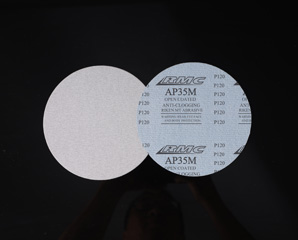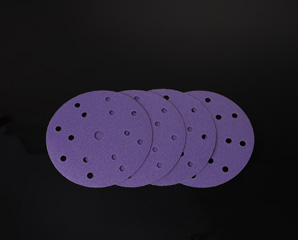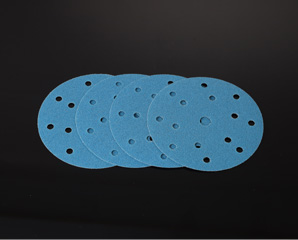
For industrial procurement teams buying sanding discs at volume, the unit price negotiation is the easy part. The hard part—and the part that determines whether the procurement decision actually delivers value—is ensuring that the discs from the third container perform identically to the discs from the qualification sample. Batch-to-batch cutting consistency is the specification that most suppliers do not publish and most buyers do not formally require, yet it is the variable that most directly affects production line stability.
When disc paper abrasive products vary in cut rate between lots, the consequences are immediate and compounding. The pressure, RPM, feed speed, and dwell time parameters that were validated on the qualification sample stop producing the target finish. Technicians compensate by adjusting parameters—which introduces operator-to-operator variation and shifts the process away from the validated window. Rework rates increase, surface finish becomes unpredictable, and the cost savings from the bulk price negotiation are consumed by the labor and scrap costs of managing inconsistent performance.
This guide covers the three measurable quality standards that determine batch-to-batch consistency in sanding discs, how to build a supplier qualification process around them, and the TCO framework that makes the case for specifying correctly rather than buying on price alone.
Batch-to-batch variation in sanding disc performance is not random—it has identifiable causes in the manufacturing process. Understanding these causes makes it possible to specify the controls that prevent them.
The cut rate of a sanding disc—how quickly it removes material at a given pressure and speed—is determined by three interacting variables: abrasive grain exposure and renewal behavior, scratch pattern uniformity, and disc stability at operating speed.
Abrasive grain exposure and renewal
The resin bond system holds abrasive grains in place during cutting and releases dull grains when they are no longer cutting effectively—a property called self-sharpening behavior. The hardness of the bond determines the balance between grain retention (which maintains cut rate) and grain release (which exposes fresh cutting edges). If the bond is too hard, dull grains are retained and the disc glazes—cut rate drops and heat generation increases. If the bond is too soft, grains are released before they are fully worn, reducing disc life and increasing cost per part.
Bond hardness is determined by the resin formulation and curing process. Variation in resin mixing ratios or curing temperature between production batches changes bond hardness, which changes the self-sharpening behavior and therefore the cut rate profile across the disc's service life.
Scratch pattern uniformity
The scratch pattern produced by a sanding disc—the size, depth, and distribution of individual scratches—determines the surface finish quality and the amount of material that subsequent sanding stages must remove. Scratch pattern uniformity depends on grain size distribution (how consistent the grain size is within the specified grit range) and coating uniformity (how evenly the grains are distributed across the disc surface).
Uneven grain distribution creates localized areas of higher and lower cutting density—"hot spots" that cut more aggressively than the surrounding area, and "cold spots" that cut less aggressively or glaze quickly. The result is a surface with inconsistent roughness that requires additional sanding to correct and that produces uneven staining or coating absorption in downstream finishing operations.
Disc stability at operating speed
At the RPM used in production, the disc must remain flat and stable against the backing pad. Backing material strength and Hook & Loop attachment consistency determine whether the disc maintains stable contact with the workpiece or develops micro-vibration that produces chatter marks and inconsistent surface finish.
Resin mixing and curing variation is the primary source of bond hardness inconsistency between batches. Small changes in resin component ratios, mixing time, or curing oven temperature produce measurable changes in bond hardness that translate directly into cut rate variation.
Uneven coating and grain planting—caused by inconsistent coating weight application or grain distribution in the electrostatic planting process—produces the localized density variation that creates hot spots and cold spots on the disc surface.
Hook & Loop inconsistency—variation in loop fiber density, adhesive bond strength, or backing material properties—causes micro-slippage between the disc and the backing pad at high RPM, which introduces wobble and vibration that degrades surface finish and accelerates disc wear.
For product specifications and configuration options, see the abrasive disc product page here.
A sanding disc qualification process that evaluates only grit and price leaves the three primary sources of batch variation unaddressed. These are the measurable standards that predict whether a supplier's discs will perform consistently across lots.
The resin-over-resin bond system—a maker coat that anchors the abrasive grains to the backing, followed by a size coat that locks the grains in position—is the structural foundation of the disc's cutting performance. Bond strength determines how well the grains are retained during cutting, how the disc responds to heat generated during sanding, and how consistently the self-sharpening behavior operates across the disc's service life.
What to request from suppliers
Ask for documentation of the resin system used and evidence of bond durability under heat and mechanical load. A supplier who can describe their resin formulation controls and curing process verification is managing this variable actively. A supplier who cannot describe their bond system in technical terms is not.
How to evaluate in incoming QC
Run a controlled sanding test on a standardized substrate at fixed pressure and RPM. Measure cut rate at defined intervals across the disc's service life—not just at the start of a new disc. A disc with consistent bond strength will maintain a relatively stable cut rate until near the end of its service life. A disc with inconsistent bond strength will show erratic cut rate behavior—cutting aggressively early, then glazing suddenly, or cutting inconsistently across the disc surface.
Grain distribution uniformity across the disc surface is the specification that most directly determines scratch pattern consistency and surface finish quality. It is also the specification that is most difficult to evaluate from a data sheet—it requires physical inspection and controlled sanding tests.
What to request from suppliers
Ask for process controls on coating weight and grain distribution consistency. Specifically, ask what measurement or inspection method is used to verify coating uniformity within a production batch and between batches. Automated coating lines with in-process weight measurement and distribution monitoring provide more consistent results than manual or semi-automated processes.
How to evaluate in incoming QC
Examine discs from multiple positions within a lot under consistent lighting—look for visible density variation, areas where grain coverage appears lighter or heavier than the surrounding surface. Run a controlled sanding test on a flat substrate and examine the sanded surface under raking light for localized areas of different roughness or scratch depth. Consistent grain planting produces a uniform scratch pattern across the full disc area; uneven planting produces visible variation.
Hook & Loop attachment is the interface between the disc and the backing pad, and its consistency determines whether the disc maintains stable, vibration-free contact with the workpiece at operating speed. Inconsistent Hook & Loop performance is a common source of surface finish variation that is often misdiagnosed as a machine or operator problem.
What to request from suppliers
Request fastening strength specifications—the force required to separate the disc from a standard loop pad—and confirm that this specification is maintained across production lots. Ask about edge lift resistance after repeated mounting and dismounting cycles, which is relevant for discs that are removed and remounted during production use.
How to evaluate in incoming QC
Mount a disc on the backing pad and run at operating RPM without contact with the workpiece. Observe for any visible wobble or disc movement relative to the pad. After a defined number of mounting cycles, check for edge lift—the disc edge separating from the pad surface—which indicates Hook & Loop degradation that will cause vibration and inconsistent contact pressure during sanding.
For enterprise procurement teams, the question behind the qualification checklist is: what manufacturing controls does the supplier have in place to ensure that the lot delivered in month six performs the same as the qualification sample? This is where automated production line controls and process traceability become the risk management tools for bulk procurement.
Automated production line controls
RMC's sanding disc production uses automated line controls for coating weight application, grain distribution, and curing process parameters. Automation reduces the operator-to-operator and shift-to-shift variation that is the primary source of batch inconsistency in less controlled manufacturing environments. Consistent coating weight means consistent grain density; consistent curing parameters mean consistent bond hardness; consistent bond hardness means consistent cut rate across lots.
Standardized in-process checks
In-process quality checks at defined production stages—coating weight verification, curing temperature monitoring, and finished disc sampling for cut rate and surface finish testing—provide the data foundation for lot-to-lot consistency claims. A supplier who conducts and documents in-process checks can provide evidence of consistency; a supplier who relies on end-of-line inspection alone cannot.
Traceability for repeat ordering
Lot identification and traceability documentation allow procurement teams to correlate field performance data with specific production lots. When a lot performs differently from the validated specification, traceability allows the root cause to be identified and corrected before the next order. For enterprise buyers with validated process parameters, traceability is the mechanism that protects the validation across multiple procurement cycles.
For related paper-based abrasive systems and additional product options, this reference covers the broader abrasive paper range:
The cost of batch-to-batch inconsistency in disc paper abrasive products is not uniform across all applications. These are the environments where cut rate variation has the highest downstream cost.
Wood and furniture finishing
In furniture manufacturing, sanding disc performance directly affects staining and coating uniformity. A disc that cuts more aggressively than the validated specification leaves a rougher surface that absorbs stain unevenly—producing visible color variation across the panel that requires re-sanding and re-coating. The rework cost includes not just the sanding labor but the coating materials and drying time for the re-coat cycle.
Automotive refinishing and body shops at scale
In automotive refinishing, technicians develop muscle memory for the pressure and dwell time required to achieve the target finish with a specific disc specification. When a new lot cuts differently, technicians must relearn the process—which introduces variation between technicians and between vehicles until the new parameters are established. For body shops processing high volumes, this relearning period generates measurable rework and throughput loss.
Metal fabrication and surface preparation
Inconsistent cut rate in metal sanding applications can cause overheating—particularly with discs that are harder than the validated specification and retain dull grains rather than self-sharpening. Overheating causes surface discoloration on stainless steel and other heat-sensitive metals, and can affect the metallurgical properties of the surface layer in precision applications. Inconsistent Ra values from variable disc performance affect coating adhesion and corrosion resistance in downstream finishing operations.
Composites and plastics
Composite and plastic substrates are particularly sensitive to cut rate variation. A disc lot that is more aggressive than the validated specification can generate sufficient heat to melt or warp thermoplastic surfaces. A lot that is less aggressive glazes quickly and reduces throughput without producing the target surface condition. Both failure modes are more costly in composites than in wood or metal because the substrate damage may be irreversible.
Substrate material determines the appropriate grit type, coating density, and bond hardness. Wood, metal, paint, and composite substrates each have different abrasion characteristics and heat sensitivity that affect the optimal disc specification. Machine type—dual-action orbital, random orbital, or angle grinder—determines the operating RPM range and the contact pressure profile, which affects the required bond hardness and backing strength. Target finish standard—stock removal, intermediate sanding, or final finish before coating—determines the grit sequence and the surface roughness target at each stage.
Disc size and hole pattern must match the backing pad and dust extraction system. Hook & Loop specification must be compatible with the backing pad's hook material. Confirm these compatibility requirements before ordering trial quantities.
Step 1: Lot-based sample approval
Request samples from the specific production lot that will be shipped, not from a separate qualification sample lot. Lot-based sample approval is the only way to verify that the production lot meets the validated specification—a qualification sample from a different lot provides no assurance about the production lot's performance.
Step 2: Controlled pilot run with fixed parameters
Run the lot samples on a standardized substrate with fixed machine parameters—RPM, pressure, feed speed, and dwell time from the validated process. Record:
Cut rate: time to reach the target surface condition
Clogging tendency: visual inspection of disc surface after defined use
Heat generation: substrate temperature after defined use
Scratch uniformity: surface roughness measurement and visual inspection under raking light
Rework rate: percentage of test panels requiring additional sanding
Step 3: Parameter lock and repeat lot requirement
If the pilot run confirms that the lot meets the validated specification, document the lot number and the confirmed process parameters. Require the supplier to maintain the same production control plan for all subsequent lots and to provide lot traceability documentation with each shipment. This creates the audit trail that allows field performance to be correlated with production data if variation is detected in future lots.
The total cost of ownership for sanding discs in a production environment includes costs that are not visible in the unit price comparison:
Line downtime from parameter re-tuning: when a new lot cuts differently from the validated specification, production must stop while parameters are re-established. The downtime cost—lost throughput, labor cost during re-tuning, and the scrap generated during the re-tuning process—can exceed the cost of the disc lot itself for high-volume production lines.
Scrap and rework from coating defects: surface finish variation from inconsistent discs produces coating defects that are discovered after the coating process—the most expensive point in the production sequence to detect a sanding problem. Rework at this stage includes stripping, re-sanding, and re-coating, with associated material and labor costs.
Higher labor time per part: inconsistent discs require more operator attention and more frequent disc changes to maintain acceptable surface quality. The additional labor time per part accumulates across a production shift into a measurable throughput reduction.
Unpredictable dust and cleanup burden: discs that break down unpredictably—shedding grain or backing material—generate higher dust loads and require more frequent machine cleaning. In facilities with dust extraction systems sized for normal disc wear rates, unpredictable breakdown can overload the extraction system and create housekeeping problems.
Stable cut rate across lots allows production parameters to be standardized across shifts, operators, and production sites. Standardized parameters reduce operator-to-operator variation, simplify training for new operators, and enable consistent takt time planning. For multi-site operations where the same product is manufactured at different facilities, consistent disc performance is a prerequisite for consistent product quality across sites.
The TCO comparison that justifies a premium for consistent disc paper abrasive products is straightforward:
Total cost per part = (disc cost per part) + (rework cost × defect rate) + (downtime cost × re-tuning frequency) + (labor premium for parameter management)
A disc with a higher unit price but lower defect rate, lower re-tuning frequency, and lower labor premium will have a lower total cost per part than a cheaper disc with variable performance. For high-volume production lines, the difference compounds across millions of parts per year.
Bulk procurement of sanding discs only delivers its intended value when performance is repeatable across lots. The three measurable standards that predict batch-to-batch consistency—resin-over-resin bond strength, grain planting and coating uniformity, and Hook & Loop grabbing force—are the specifications that should drive supplier qualification, not unit price alone. Pair these standards with a lot-based pilot run process and traceable repeat ordering, and the validated process parameters that took time and material to establish will remain valid across the full procurement contract.
The cost of inconsistency is not visible in the unit price comparison. It shows up in rework rates, downtime, and coating defects—and it compounds with volume.
Ready to qualify a consistent sanding disc specification for your production line? Submit your requirements for an accurate configuration recommendation and bulk quotation.
Visit the Abrasive Disc Product Page
To receive a specific recommendation, provide the following:
Work conditions: Substrate material, machine type (DA orbital, random orbital, angle grinder), RPM range, dust extraction setup, production shift hours
Quantity: Monthly consumption volume, trial order size, target contract volume
Size and specifications: Disc diameter, hole pattern, Hook & Loop type, backing preference, grit range and sequence
Target metrics: Cut rate target, surface finish or Ra target, disc life target per grit stage, defect limit, batch-to-batch consistency requirement
Current problem: Batch-to-batch cut rate variation, clogging or glazing, poor Hook & Loop hold at operating RPM, overheating, inconsistent scratch pattern, rework from coating defects
1. What are sanding discs?
Sanding discs are round coated abrasive products used on power sanders—dual-action orbital, random orbital, and angle grinder platforms—to remove material and control surface finish through a combination of abrasive grain type, grit size, resin bond system, backing material, and attachment method. They are specified by diameter, grit, backing type, hole pattern for dust extraction, and attachment type—most commonly Hook & Loop for tool-based applications. For industrial and production use, the relevant performance specifications extend beyond grit to include bond strength, grain distribution uniformity, and Hook & Loop consistency, which together determine cut rate stability and batch-to-batch performance repeatability.
2. How do disc paper abrasive products compare with abrasive belts or sheets?
Sanding discs are optimized for tool-based sanding with fast changeover, contour following capability on dual-action platforms, and efficient dust extraction through the disc hole pattern. They are the appropriate choice for production sanding operations where the machine platform is a random orbital or dual-action sander. Abrasive belts are designed for high-throughput linear sanding on wide-belt or narrow-belt machines, where the continuous belt contact provides higher material removal rates on large flat surfaces. Abrasive sheets are appropriate for manual sanding and small-area work where flexibility and low cost per unit are priorities. The correct choice depends on the machine platform, the contact area geometry, the throughput requirement, and the target finish standard.
3. What ROI or payback can consistent sanding discs deliver for a production operation?
ROI comes from four sources: reduced rework and scrap from surface finish variation caused by inconsistent cut rate; reduced line downtime from parameter re-tuning when new lots perform differently from the validated specification; higher throughput stability from standardized process parameters that remain valid across lots; and fewer downstream coating defects that require stripping and re-coating. For high-volume production lines where sanding disc performance directly affects coating quality, the annual cost of batch inconsistency—in rework labor, coating materials, and downtime—typically exceeds the price premium of a consistently manufactured disc specification by a significant margin.
4. Do we need to modify our production line to switch to a different sanding disc supplier?
No hardware modifications are required. The transition process involves running a lot-based pilot with fixed machine parameters to validate that the new disc specification meets the performance targets, confirming dust extraction compatibility with the hole pattern and backing type, and documenting the confirmed process parameters for the new specification. If the new disc cuts differently from the current specification—even if both meet the nominal grit specification—process parameters may need adjustment during the pilot phase. This is why lot-based pilot runs are essential for supplier transitions, not just for initial qualification.
5. What parameters should we provide for correct sanding disc selection and an accurate bulk quotation?
Provide: substrate material type and condition, sanding stage (stock removal, intermediate, or final finish), machine type and model, operating RPM range, disc diameter and hole pattern, Hook & Loop backing requirement, grit sequence for all stages in the process, target surface finish or Ra value at each stage, expected disc life per stage, monthly consumption volume, current defect symptoms (batch variation, clogging, glazing, overheating, inconsistent scratch pattern), and any specific consistency or traceability requirements for your quality management system.

How Non Woven Grinding Discs Deliver Uniform Surface Finishes while Preserving Material Integrity

When Sandpaper Pads Fail: Understanding Common Causes of Poor Sanding Performance
Avoiding Common Mistakes When Choosing and Using Steel Wool Abrasives for Surface Finishing
 EN
EN
 ko
ko  fr
fr  de
de  es
es  it
it  ru
ru  vi
vi  th
th  pl
pl  pt
pt