In high-volume metal fabrication and precision surface preparation, choosing the correct abrasive tool dictates your entire workflow's efficiency. For decades, the standard coated flap disc has been the go-to workhorse for heavy stock removal and aggressive weld leveling. However, as modern industrial standards shift toward tighter surface roughness requirements and flawless aesthetic coatings, traditional coated abrasives can sometimes be too aggressive for final-stage finishing.
To achieve a true premium surface finish without altering a workpiece's structural geometry, smart fabricators turn to a highly specialized alternative: the non-woven flap disc. Understanding exactly when to utilize a heavy-duty coated disc and when to switch to a flexible non-woven flap disc is a critical skill that can drastically reduce scrap rates, optimize labor costs, and elevate the quality of your finished products.
To make the right choice on the shop floor, technical buyers and operators must understand the structural engineering that separates these two abrasive categories.
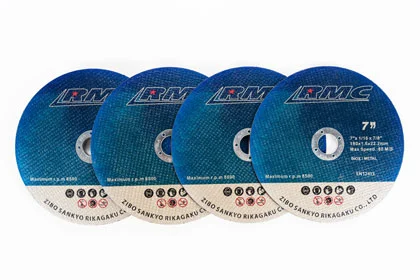
Traditional coated flap discs consist of overlapping flaps of heavy cloth or paper backing coated with a dense layer of rigid abrasive minerals, such as Zirconia Alumina or Ceramic grains. These flaps are glued securely to a rigid fiberglass or plastic backing plate.
Performance Profile: Because the backing is unyielding, the abrasive grains bite deeply into the metal. This makes coated flap discs incredibly efficient for rapid stock removal, heavy deburring, and knocking down large structural weld beads.
The Limitation: This extreme rigidity makes them highly unforgiving. A slight lapse in operator control or excessive pressure can instantly cause gouging, flat-spotting, or deep scratches that ruin thin-gauge sheet metal.
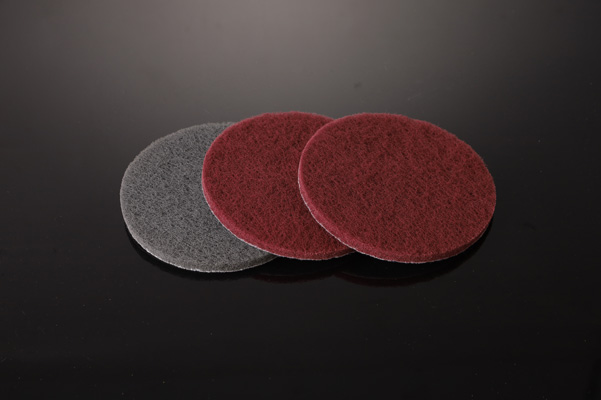
Instead of rigid cloth-backed sandpaper, a non-woven flap disc is constructed from overlapping flaps of a three-dimensional nylon fiber web. These synthetic web fibers are thoroughly impregnated with premium abrasive minerals (typically Aluminum Oxide or Silicon Carbide) and securely bonded together with high-strength resins.
Performance Profile: The multi-directional orientation of the nylon fibers gives the non-woven flap disc a natural, spring-like cushioning effect. When applied to a metal workpiece, the disc conforms dynamically to irregular contours, complex curves, and fillet welds.
The Advantage: Instead of digging aggressively into the base material, the cushioned web diffuses the cutting force across a broader micro-surface. This enables the operator to clean, blend, and condition surfaces with total precision, providing a highly predictable finish while keeping the parent metal's dimensional tolerances completely intact.
Coated flap discs should remain your primary tool during the initial fabrication and structural shaping stages of production. They are specifically engineered to handle raw, aggressive cutting tasks where aesthetic finishing is not the primary concern.
You should opt for a coated flap disc when your operations involve:
Heavy Weld Leveling: Rapidly grinding down large, thick MIG or stick weld beads on structural steel beams or heavy enclosures.
Edge Beveling & Chamfering: Preparing thick metal plates for welding by cutting precise bevels along the joint edges.
Heavy Deburring: Removing massive, sharp metal burrs generated by heavy plasma cutting, shearing, or stamping processes.
Deep Material Removal: Removing thick scale, slag, or deeply embedded surface pitting from raw cast iron or structural carbon steels.
While coated discs dominate heavy metal removal, relying on them for final-stage surface finishing is a common manufacturing bottleneck. Attempting to achieve a smooth, paint-ready surface with an aggressive coated disc often results in deep scratch patterns that require multiple tedious steps of hand-sanding to eliminate.
Switching to a non-woven flap disc is the ultimate choice when your production line reaches the following critical phases:
For high-precision applications—such as TIG welds on stainless steel food processing equipment, commercial kitchen fixtures, or architectural panels—you do not want to gouge the surrounding metal. A non-woven flap disc allows you to blend the weld seam perfectly flat into the adjacent metal surface in a single, controlled step, leaving a highly uniform finish.
Grinding heat-sensitive metals like stainless steel, titanium, and aluminum with a rigid coated disc frequently leads to thermal distortion, warping, and brown-blue heat discoloration marks. The open-web architecture of a non-woven flap disc allows cooling air to circulate constantly through the contact zone. This drastically lowers surface friction and temperatures, completely eliminating the need for post-grinding rework to repair burn marks.
When working with softer non-ferrous metals like aluminum, copper, or brass, traditional sandpaper quickly becomes clogged as soft metal swarf melts and sticks between the abrasive grains (a defect known as loading). Because a non-woven flap disc features large internal gaps within its nylon web, dust, debris, and soft metal particles pass straight through the structure rather than accumulating on the face. This self-cleaning action ensures an uninterrupted, consistent cut and dramatically extends the usable life of the disc.
If your client contracts require a specific linear brushed pattern, satin finish, or a precise surface roughness (Ra) value to meet strict sanitary standards, coated abrasives simply cannot deliver. The multi-directional fibers of a non-woven flap disc smoothly refine the surface, yielding a decorative, professional brushed texture that easily matches factory finishes.
To assist engineering managers and procurement departments in choosing the ideal abrasive configuration for their shop floors, the table below provides a concise comparison of operating parameters:
| Operational Parameter | Traditional Coated Flap Disc | Non-Woven Flap Disc |
|---|---|---|
| Primary Material Composition | Overlapping cloth/paper backing with dense grain | Overlapping 3D impregnated nylon fiber web |
| Material Removal Rate (MRR) | High to Extremely High | Low to Moderate |
| Risk of Gouging Base Metal | High | Extremely Low |
| Heat Generation at Contact Zone | High (Prone to heat discoloration) | Low (Excellent heat dissipation) |
| Resistance to Loading (Clogging) | Low (Prone to loading on soft metals) | Extremely High (Self-cleaning open-web) |
| Aesthetic Finish Capability | Rough scratch patterns (Requires polishing) | Uniform Satin / Hairline Brushed Finish |
| Ideal Downstream Industries | Structural steel, heavy machinery, shipyards | Food processing, aerospace, high-end MRO |
Maximizing your manufacturing efficiency requires high-tier abrasive solutions engineered to rigid global manufacturing standards. As an established, world-class manufacturing specialist utilizing advanced automated production lines imported from Germany and a cutting-edge R&D center, RMC Abrasives supplies a comprehensive lineup of surface treatment solutions designed to reduce operator error and boost your profit margins.
Our manufacturing ecosystem covers the entire supply chain, starting from the precise production of massive jumbo rolls of emery cloth and sandpaper down to highly specialized converted workshop consumables. To optimize your facility's entire surface preparation cycle and configure a highly cost-effective setup, you can discover different types of abrasives wholesale through our comprehensive online catalog. Whether your specific workflows require aggressive heavy-stock removal options or flexible finishing tools, you can explore our full wholesale abrasive product lines to procure consistent mineral grading, high resin thermal stability, and exceptional edge durability that keeps your production lines running smoothly.
The choice between coated and non-woven technology should not be a matter of choosing one over the other; rather, it is about knowing exactly when to transition between them during the production cycle. Coated flap discs are unmatched when you need to hog off large volumes of raw metal quickly. However, when your workflow shifts toward precision weld blending, decorative satin texturing, cool grinding on sensitive alloys, and preventing expensive base metal damage, switching to a premium non-woven flap disc is the ultimate choice. Integrating this specialized tool into your finishing lines allows your facility to reduce scrap rates, optimize labor hours, and consistently deliver superior surface quality.
Ready to transform your metal finishing performance? Contact the technical team at RMC Abrasives today to request engineering guidance or order a customized industrial sample kit for your facility.
No. They are engineered to be complementary tools. A coated flap disc is required for the initial heavy leveling of a protruding weld bead or deep scale removal. A non-woven flap disc is used immediately afterward to blend, clean, and refine the scratched surface into a premium finish without risking gouges.
Unlike traditional coated abrasives labeled with specific numerical grits (like P60 or P120), non-woven grading uses coarser, fiber-based designations. The standard options include Coarse (for light weld blending and scale removal), Medium (for general-purpose surface conditioning and surface cleaning), and Very Fine/Ultra Fine (for final decorative satin or hairline finishing).
Aluminum is a soft metal with a low melting point that easily clogs standard sandpaper. The open, porous design of a non-woven flap disc provides exceptional resistance to loading, allowing aluminum swarf to pass through the gaps safely without accumulating on the face, preserving a cool and consistent cut.
Non-woven products perform best at lower speeds than rigid coated abrasives. Operating them at a reduced RPM (typically between 3,000 to 6,000 RPM depending on disc diameter) prevents the nylon fiber matrix from overheating, maximizes the lifespan of the tool, and delivers a much more consistent linear brushed finish.
Because the three-dimensional nylon mesh provides a flexible, cushioned contact area, the disc is significantly less aggressive than rigid alternatives. This forgiving design ensures that even less-experienced operators can blend welds and clean metals safely without accidentally cutting flat spots or gouging high-value workpieces.
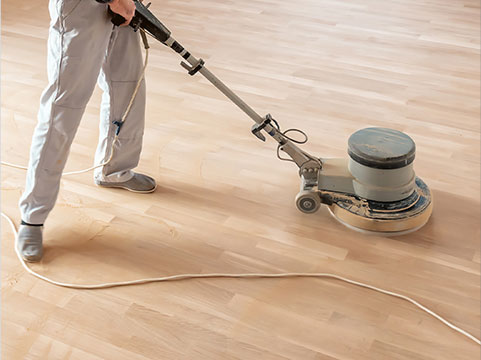
How Non Woven Grinding Discs Deliver Uniform Surface Finishes while Preserving Material Integrity
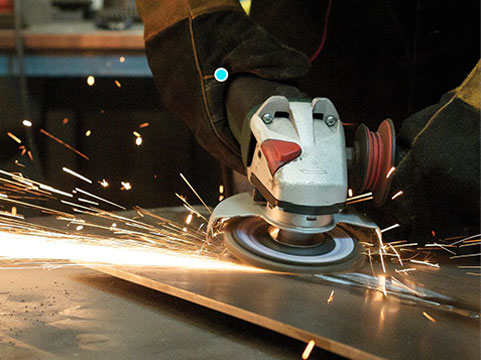
When Sandpaper Pads Fail: Understanding Common Causes of Poor Sanding Performance
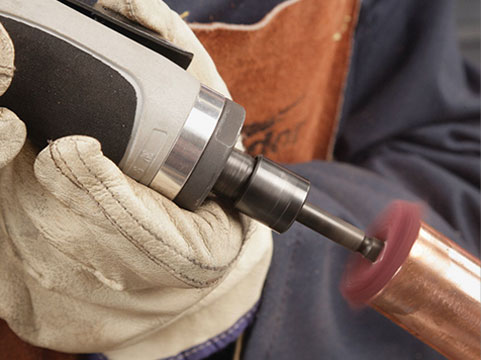
Avoiding Common Mistakes When Choosing and Using Steel Wool Abrasives for Surface Finishing
 EN
EN
 ko
ko  fr
fr  de
de  es
es  it
it  ru
ru  vi
vi  th
th  pl
pl  pt
pt