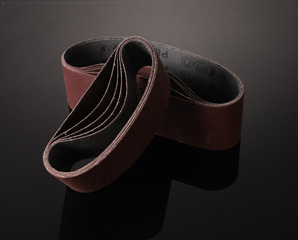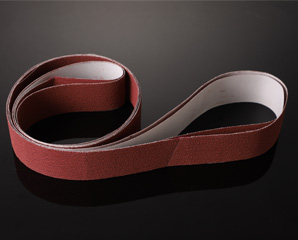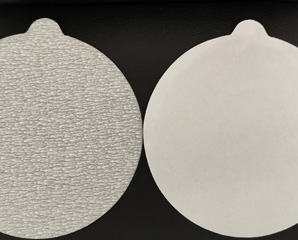
Surface defects on wide furniture panels are one of the most expensive quality problems in wood processing—not because the defects themselves are difficult to see, but because they are often invisible until after staining or topcoat application, at which point the rework cost includes not just re-sanding but stripping, re-coating, and in some cases scrapping the panel entirely. Chatter marks and sanding lines that telegraph through paint finishes are the most common complaints from furniture manufacturers running wide-belt sanding lines, and they are consistently misdiagnosed as machine problems or operator errors when the root cause is the grinding belt itself.
For procurement teams and production managers evaluating abrasive belt manufacturers, the selection decision is more consequential than it appears. Belt joint type, backing stability under tension, and coating uniformity are the variables that determine whether a wide-belt sanding line produces paint-ready panels consistently or generates a steady stream of rework.
This guide covers the defect mechanisms, the belt specifications that control them, and the TCO framework that makes the case for specifying correctly rather than buying on price.
Understanding the root cause of wide-belt sanding defects is the prerequisite for selecting the belt specification that prevents them. Most chatter marks and sanding lines have identifiable mechanical causes that a correctly specified belt can address.
Chatter marks are periodic surface patterns—evenly spaced ridges or waves across the panel surface—that result from oscillating contact pressure between the belt and the workpiece. The oscillation can originate from several sources: machine vibration from worn bearings or unbalanced drums, inconsistent belt tension that allows the belt to flutter, or thickness variation in the belt itself that creates a repeating pressure pulse as the belt circumference passes over the panel.
The critical point for belt selection is that even a well-maintained machine with correct tension settings will produce chatter marks if the belt has thickness variation or joint-related stiffness changes that create periodic pressure pulses. The belt is not a passive component in the sanding system—it is an active contributor to the contact pressure profile, and its dimensional consistency directly affects the surface it produces.
Sanding lines—parallel scratches running in the feed direction or at an angle—have different causes: incorrect grit sequence that leaves scratches too deep for the next stage to remove, belt loading that causes uneven cutting, poor belt tracking that concentrates wear on one edge, or unstable belt tension that allows lateral movement during the cut.
The grinding belt controls two aspects of the sanding outcome that the machine cannot compensate for: the scratch pattern geometry (determined by grit type, size, and coating density) and the contact pressure uniformity (determined by backing stiffness, thickness consistency, and joint quality).
Cut rate and finish quality are determined by the abrasive grain specification—grain type, grit size, and coating density (open coat versus closed coat). A belt that cuts aggressively but leaves a coarse, irregular scratch pattern will require more subsequent sanding stages to reach the target roughness before coating. A belt with the correct grit and coating density for the material and sanding stage produces a uniform scratch pattern that the next stage can efficiently refine.
Contact pressure uniformity is determined by the backing and joint. A backing that maintains consistent stiffness and thickness across the full belt width and length produces consistent contact pressure across the panel. A joint that introduces a thickness step or stiffness change creates a repeating pressure pulse—one per belt revolution—that produces a periodic mark on the panel surface at the belt circumference interval.
For product specifications and configuration options, see the abrasive belt product page here.
Belt joint type is the specification that most procurement teams overlook and that most experienced abrasive belt manufacturers ask about first. It is the most common source of repeating periodic marks on wide furniture panels, and it is entirely controllable through correct specification.
Every abrasive belt has a splice—the joint where the two ends of the belt are joined to form a continuous loop. At this joint, there is inevitably some change in the local thickness, stiffness, or surface geometry of the belt. The magnitude of this change depends on the joint type and the quality of the splicing process.
As the belt revolves around the sanding machine, the joint passes over the workpiece once per revolution. If the joint creates a pressure pulse—because it is thicker, stiffer, or less flexible than the rest of the belt—that pulse is transferred to the panel surface as a periodic mark. The spacing of the marks corresponds to the belt circumference, which is a diagnostic clue: if the spacing of chatter marks on the panel matches the belt circumference, the joint is the likely cause.
Flatness and step height: the joint should be as flat as possible, with minimal step height between the two belt ends. A step height that is detectable by touch is likely to produce a visible mark on a paint-ready panel surface.
Flexibility: the joint must flex as the belt passes around the contact drum and platen. A rigid joint that resists bending creates a stiffness discontinuity that produces a pressure pulse at the joint location. For fine finishing applications, joint flexibility is as important as joint strength.
Bond strength and heat resistance: the joint adhesive must maintain bond strength under the heat generated during sanding and under the tension applied by the machine. A joint that fails under operating conditions causes immediate belt failure and potential machine damage.
Transition smoothness: for high-visibility paint surfaces and high-speed wide-belt applications, joint designs that minimize the transition zone—the length of belt over which the thickness and stiffness change from the belt body to the joint and back—produce fewer visible marks than joints with abrupt transitions.
Before running a new belt specification on production panels, run a short test on scrap material of the same type and thickness as the production panel. Examine the sanded surface under raking light for periodic marks. Measure the spacing of any periodic marks and compare to the belt circumference—a match confirms that the joint is the source. This simple test takes less than five minutes and can prevent a full production run of defective panels.
A grinding belt RFQ that specifies only width, length, and grit leaves most of the performance variables unaddressed. These are the specifications that determine whether the belt will produce consistent, paint-ready surfaces on wide furniture panels.
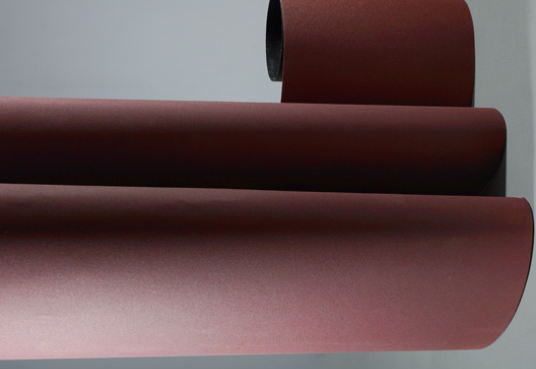
Backing type and strength for high-tension wide-belt applications
Cloth backing is the correct specification for wide-belt sanding applications where high machine tension is required to maintain belt stability across the full panel width. High-strength cloth backing—typically woven polyester or cotton-polyester blends with defined tensile strength ratings—maintains dimensional stability under the tension applied by wide-belt sanders, which can be substantially higher than the tension used in narrower belt applications.
Dimensional stability under tension means that the belt does not stretch or deform during operation, which would change the contact pressure profile across the panel width and introduce lateral variation in surface roughness. A backing that stretches under tension produces inconsistent results across the panel width—the center and edges of the panel receive different contact pressure and produce different surface roughness, which shows as uneven staining or coating absorption after finishing.
Paper backing is appropriate for lighter-duty applications and lower-tension machines but is not suitable for high-tension wide-belt sanding of large furniture panels where backing stability is a primary performance requirement.
Belt width and length tolerance
Tight dimensional tolerance on belt width and length supports stable tracking and consistent pressure distribution across the panel width. A belt that is wider than the machine's tracking system expects will track inconsistently; a belt that varies in width along its length will produce varying contact pressure. Request dimensional tolerance specifications and confirm that they are appropriate for the machine's tracking system sensitivity.
Grit type and sequence recommendation
The correct grit specification depends on the panel material, the sanding stage (calibration, intermediate, or finish), and the target surface roughness before primer or topcoat. Request a grit sequence recommendation from the supplier based on your specific material and coating system—a supplier who asks about your coating system before recommending a grit sequence is providing technically grounded advice; one who recommends a grit without asking is not.
Coating type and anti-loading features
Open-coat abrasive belts—where the abrasive grain covers approximately 50–70% of the backing surface—are appropriate for resinous woods and MDF, where the open spaces between grains provide room for sanding debris to escape without loading the belt. Closed-coat belts provide a more uniform scratch pattern but load more quickly on materials that generate sticky or resinous debris. Anti-loading stearate coatings reduce clogging on MDF and painted surfaces, extending belt life and maintaining consistent cut rate throughout the belt's service life.
Joint specification matched to sanding stage
Request the supplier's recommended joint type for each sanding stage in the sequence. Calibration stages—where material removal rate is the priority—may tolerate a more robust joint with slightly higher step height. Finish sanding stages—where surface quality is the priority—require the smoothest available joint transition to avoid periodic marks on paint-ready surfaces.
The performance advantage of a correctly specified grinding belt is most significant in specific production contexts. These are the applications where belt specification directly determines whether the panel meets the quality standard for the next process stage.
Wide furniture panels before painting
MDF and veneered boards destined for high-gloss or semi-gloss paint finishes are the most demanding application for wide-belt sanding quality. Paint films amplify surface texture—a scratch pattern that is invisible on a raw panel becomes visible as a texture variation under a gloss topcoat. The combination of correct grit sequence, stable cloth backing, and smooth joint transition is the minimum specification for panels going to a paint line.
Cabinet doors and table tops
Large flat surfaces with high gloss requirements are the most visible test of sanding quality. Any periodic mark, sanding line, or roughness variation across the panel width will be visible in the finished product under normal lighting conditions. These applications justify the investment in premium belt specification and incoming QC inspection of joint quality.
Primer sanding
The sanding stage between primer coats is where the scratch pattern from the previous stage is either corrected or amplified. A stable, consistent scratch pattern from the primer sanding stage produces a uniform surface for the topcoat; an inconsistent pattern with periodic marks or sanding lines produces a topcoat with visible texture variation. Belt specification for primer sanding should prioritize scratch pattern uniformity over cut rate.
Solid wood calibration and finishing
Softer wood species—pine, poplar, and similar—are more susceptible to washboarding and vibration-induced surface patterns than harder species because the softer material deforms more readily under pressure pulses. Correct belt tension, stable cloth backing, and smooth joint transitions are particularly important for soft wood calibration to avoid the washboard patterns that are difficult to remove in subsequent sanding stages.
Belt tension: correct tension is the most important machine setup variable for wide-belt sanding quality. Under-tension allows the belt to flutter and vibrate, producing chatter marks. Over-tension stresses the belt backing and joint, accelerating wear and increasing the risk of joint failure. Follow the machine manufacturer's tension specification for the belt width and backing type in use.
Tracking and platen condition: stable belt tracking ensures consistent contact pressure across the full panel width. Check tracking alignment at the start of each shift and after belt changes. Platen condition—flatness, surface condition, and hardness—directly affects contact pressure uniformity; a worn or damaged platen produces uneven pressure that no belt specification can compensate for.
Feed speed and pressure settings: feed speed and sanding pressure should be matched to the grit stage and material. Excessive pressure at fine grit stages generates heat that loads the belt and degrades the abrasive grain, reducing cut rate and producing an inconsistent scratch pattern. Correct settings extend belt life and maintain consistent surface quality throughout the belt's service life.
Dust extraction: adequate dust extraction prevents sanding debris from accumulating on the belt surface and loading the abrasive. Loaded belts cut less efficiently, generate more heat, and produce less consistent surface roughness. Tune dust extraction to the material being sanded—MDF generates fine dust that requires higher extraction velocity than solid wood chip.
The relevant cost comparison for grinding belt procurement is not belt price per unit—it is cost per usable panel, which includes belt cost, downtime for belt changes, and scrap or rework cost from surface defects.
Cost per usable panel = (belt cost ÷ panels per belt) + (downtime cost × belt change frequency) + (rework cost × defect rate)
A belt with a lower purchase price but higher defect rate and shorter service life will have a higher cost per usable panel than a premium belt with stable backing and smooth joint transitions. The rework cost element is typically the largest variable—a single panel that requires stripping and re-coating costs more in labor and materials than the price difference between a standard and premium belt specification.
RMC's wide abrasive belts use high-strength cloth backing that maintains dimensional stability under the high tension applied by wide-belt sanders for large furniture panels. Dimensional stability under tension means consistent contact pressure across the full panel width throughout the belt's service life—not just at the start of a new belt. Consistent contact pressure produces consistent surface roughness across the panel, which is the prerequisite for uniform staining and coating absorption.
The combination of stable cloth backing and controlled joint specification reduces the two most common sources of periodic marks on wide furniture panels: belt flutter from backing instability under tension, and pressure pulses from joint thickness variation. For production lines where paint-ready surface quality is the standard, this combination is the foundation of a reliable sanding process.
Chatter marks and sanding lines on wide furniture panels are process control problems with identifiable causes—and the grinding belt is a primary variable in the solution. Belt joint type determines whether the splice creates a repeating pressure pulse that marks the panel surface. Backing strength and dimensional stability under tension determine whether the belt maintains consistent contact pressure across the full panel width throughout its service life. Grit specification and coating type determine whether the scratch pattern is appropriate for the material and the downstream coating system.
By specifying cloth backing for high-tension wide-belt applications, selecting the correct joint type for each sanding stage, and confirming grit and coating specifications with suppliers who understand the downstream coating requirements, furniture manufacturers can reduce chatter marks, eliminate sanding lines, and lower the rework cost that currently absorbs margin on paint-finish panel production.
Ready to specify the right grinding belt for your wide-belt sanding line and panel material? Submit your requirements for an accurate specification recommendation and quotation.
Visit the Abrasive Belt Product Page
To receive a specific recommendation, provide the following:
Work conditions: Panel material (MDF, veneer, solid wood species), sanding stage (calibration, intermediate, finish), target coating system (primer, stain, high-gloss topcoat), humidity and dust extraction status
Quantity: Monthly belt consumption, trial order quantity, production shifts per day
Size and specifications: Belt width and length, machine model, sanding head type (platen or contact drum), tension setting range
Target metrics: Surface roughness target (Ra value), defect limit for chatter marks and sanding lines, belt life target, cut rate versus finish quality priority
Current problem: Chatter marks, joint line marks, belt tracking issues, belt loading or burning, inconsistent roughness across panel width
1. What is a grinding belt?
A grinding belt is a coated abrasive belt used on belt sanders—including wide-belt sanders for furniture panel processing—to remove material and control surface finish through a combination of abrasive grain type, grit size, coating density, backing material, and joint construction. The belt is a consumable component of the sanding system, but its specification directly determines the surface quality outcome. For wide-belt furniture panel sanding, the relevant specifications include backing type and strength, joint type and quality, grit and coating specification matched to the material and sanding stage, and dimensional tolerance for width and length.
2. How does a wide abrasive belt compare with sanding discs or sheet sanding for furniture panels?
Wide abrasive belts are designed for high-throughput, consistent panel finishing across large flat surfaces. They provide uniform contact pressure across the full panel width when correctly specified and tensioned, and they are the appropriate tool for production-scale furniture panel processing. Sanding discs and sheet sanding are appropriate for small areas, curved surfaces, and manual finishing work, but they are not suitable for large flat panels at production scale—they produce less consistent surface roughness, require more labor per panel, and cannot match the throughput of a wide-belt sanding line. For furniture manufacturers processing large volumes of flat panels, wide-belt sanding with correctly specified grinding belts is the only practical approach to achieving consistent, paint-ready surface quality.
3. What ROI can the right abrasive belt specification deliver?
ROI comes from four sources: reduced scrap rate from chatter marks and sanding lines that currently require panel rejection or rework; reduced re-sanding labor on panels that pass the sanding stage but fail at the coating stage; longer belt service life from correct specification for the material and machine tension; and higher line uptime from fewer belt failures and tracking problems. The rework cost element is typically the largest—panels that require stripping and re-coating after a paint defect cost significantly more than the price difference between a standard and correctly specified belt. For production lines with measurable defect rates from sanding-related surface problems, the payback on correct belt specification is typically rapid.
4. Do we need to modify our sanding line to fix chatter marks and sanding lines?
Not necessarily. Many chatter mark and sanding line problems improve significantly with correct belt specification—particularly joint type and backing stability—combined with correct tension, tracking alignment, platen condition, and dust extraction settings. Before investing in machine modifications, confirm that the belt specification is correct for the machine tension and sanding stage, and run the incoming QC joint test described in this article to determine whether the joint is contributing to periodic marks. If vibration and chatter marks persist after belt specification and machine setup are optimized, machine-level checks—bearings, drum condition, feed system—may be required.
5. What parameters should we provide to abrasive belt manufacturers for correct selection and an accurate quotation?
Provide: panel material type (MDF, veneer species, solid wood species), belt dimensions (width and length), machine model and sanding head type (platen or contact drum), sanding stage and position in the grit sequence, target surface roughness before the next process stage, feed speed and pressure settings, dust extraction condition, current defect symptoms (chatter marks, joint line marks, loading, inconsistent roughness), current belt specification and consumption rate, and the downstream coating system (primer type, stain, topcoat gloss level). The more specific the process information, the more accurate the belt specification recommendation will be.
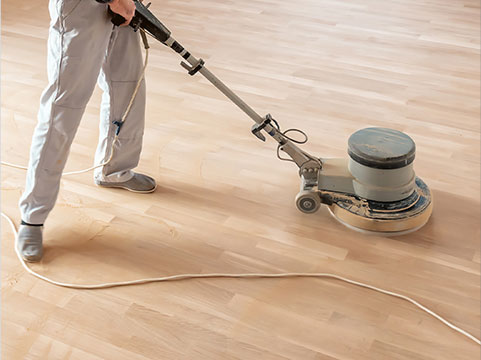
How Non Woven Grinding Discs Deliver Uniform Surface Finishes while Preserving Material Integrity
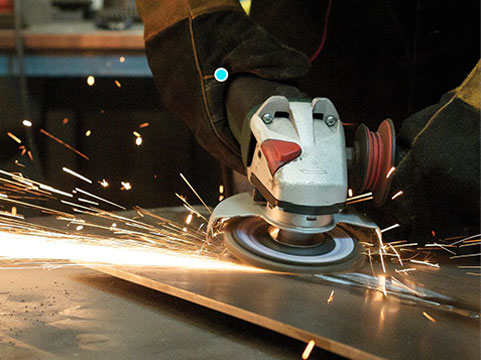
When Sandpaper Pads Fail: Understanding Common Causes of Poor Sanding Performance
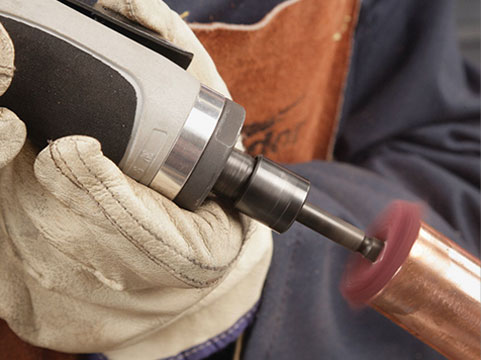
Avoiding Common Mistakes When Choosing and Using Steel Wool Abrasives for Surface Finishing
 EN
EN
 ko
ko  fr
fr  de
de  es
es  it
it  ru
ru  vi
vi  th
th  pl
pl  pt
pt