As global manufacturing facilities, commercial maintenance departments, and industrial distributors increasingly align with strict environmental, social, and governance (ESG) standards, the demand for green cleaning solutions has escalated. Traditionally, removing stubborn industrial rust, heavy surface oxides, and calcified grime required heavy reliance on volatile chemical solvents, strong acids, or abrasive toxic sprays. These chemical solutions not only present severe health hazards to equipment operators but also generate hazardous wastewater runoff that complicates regulatory compliance.
Fortunately, modern surface preparation lines can achieve immaculate results by looking toward an engineered mechanical solution. High-quality carbon steel wool provides a highly versatile, non-toxic, and physically powerful scrubbing action that targets surface contaminants without the need for toxic liquids. By replacing harsh liquid solvents with targeted mechanical abrasion, industrial operations can establish a highly efficient, sustainable, and operator-safe workflow.
For decades, industrial maintenance, repair, and operations (MRO) teams viewed chemical solvents as a necessary evil. To strip away old paint, dissolve rust, or prepare metal surfaces for welding, facilities consumed large volumes of chemical-heavy formulas. However, relying on these compounds introduces significant overhead and operational liability:
Hazardous Waste Management: Spent chemical runoff cannot simply be rinsed into municipal drains. Facilities must invest in specialized wastewater treatment infrastructure or pay high fees for hazardous waste disposal to avoid massive regulatory fines.
Operator Health Risks: Volatile organic compounds (VOCs) emitted by heavy chemical cleaners irritate respiratory systems, cause long-term skin conditions, and require extensive personal protective equipment (PPE) alongside specialized ventilation systems.
Substrate Degradation: Corrosive chemical cleaners do not know when to stop. Acidic rust removers can inadvertently pit the underlying base metal, while chemical paint strippers can weaken surrounding plastic seals, gaskets, or delicate composite components.
Transitioning to a premium mechanical abrasive like carbon steel wool completely eliminates these liabilities. Instead of dissolving contaminants via a volatile chemical reaction, steel strands work via controlled, uniform micro-scratching. This physical action shears away the surface grime while leaving zero chemical footprint behind.
Not all metallic fibers are manufactured equally. Low-tier commercial steel wool products often suffer from poor alloy selection and inconsistent manufacturing, leading to brittle strands that quickly shatter and drop metal shards into delicate machinery.
Industrial-grade carbon steel wool circumvents these vulnerabilities through advanced metal-drawing technology. Built from high-quality carbon steel, these specialized pads exhibit key engineering characteristics that make them ideal for heavy maintenance:
Unlike rigid grinding discs or flat sandpaper sheets, carbon steel wool functions as a malleable, spring-like cushion. When compressed by an operator's hand, the fibrous pad deforms smoothly to wrap completely around complex workpiece geometries. It can easily reach deep into tight corners, sharp internal radii, and intricate machine threads, ensuring a thorough, comprehensive polish in the most restricted spaces.
Premium carbon steel pads are engineered to withstand rigorous, heavy-duty rubbing without instantly tearing or falling apart. Because the long, continuous metal filaments retain superior tensile strength, the pad maintains its structural integrity throughout prolonged use, giving purchasing departments the absolute maximum value out of every single consumable item.
Because the sharp edges of the carbon steel fibers act like microscopic scrapers, they strip away external accumulation purely through physical friction. This enables facilities to achieve a perfectly clean surface using water or dry methods alone. It provides a natural, environmentally friendly abrasive action that successfully cleans precision tools and restores specialized fixtures without introducing any toxic chemical agents to the workspace.
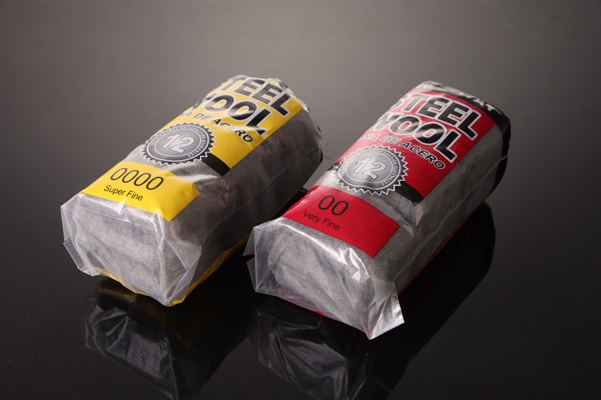
To successfully replace chemical cleansers across a diverse range of shop floors, procurement managers must select the exact grade matched to their specific surface requirements. Industrial-grade carbon steel wool is manufactured in 8 highly standardized grades, ranging from the delicate touch of #0000 to the aggressive stripping force of #4.
The reference matrix below outlines the specific operational application for each grade level, allowing technical teams to deploy the correct tool safely:
| Grade | Coarseness Level | Primary Industrial Applications | Ideal Chemical-Free Substitute For |
|---|---|---|---|
| #0000 | Super Fine | Cleaning glass, polishing delicate woodwork, buffing chrome fixtures without scratching. | Liquid glass polishes, aerosol chrome shines |
| #0000 | Super Fine | Removing wax or polish from high-end furniture, cleaning electric iron soles. | Chemical wax strippers, paint thinner rubs |
| #00 | Medium Fine | Cleaning golf clubs, metal lawn furniture, restoring suede/leather scorch marks. | Corrosive metal tarnish removers |
| #0 | Medium | Cleaning porcelain tiles, grout lines, and industrial shower enclosures. | Acidic grout cleaners, toxic scale sprays |
| #1 | Medium Coarse | Cleaning linoleum floors, bowling balls, and heavy-duty footwear soles. | Heavy industrial floor degreasers |
| #2 | Medium Coarse | Removing old wax buildup and deep scuff marks from commercial glass blocks. | Aggressive chemical finish strippers |
| #3 | Coarse | Cleaning rough cast iron, brickwork, or coarse stone surfaces. | Heavy-duty chemical solvent dips |
| #4 | Extra Coarse | Stripping stubborn exterior wood varnishes, heavy rust scaling, and thick paint coatings. | Volatile paint strippers, toxic chemical gels |
The natural, non-chemical adaptability of carbon steel wool allows it to excel across multiple industrial sectors:
Precision Tool Maintenance: Machinists and technicians use fine-grade pads to wipe down delicate measuring calipers, micrometer frames, and machine slide ways. This process lifts away surface corrosion and dried oils without scratching critical calibration marks.
Commercial Woodworking & Refinishing: When refining custom wood furniture coated in lacquer, varnish, shellac, or polyurethane, traditional sandpaper can cut too deep and ruin the profile. Fine carbon steel fibers smoothly blend out dust nibs between finish coats, resulting in a perfectly level, professional satin finish.
Effective Chrome Polishing: Chrome fixtures on industrial machinery or commercial vehicles frequently accumulate heavy road grime, exhaust carbon, and surface tarnish. Combining fine carbon steel wool pads with mild water allows operators to slice through stubborn residues smoothly, fully restoring the original metallic luster and mirror-like shine.
Maximizing your facility's operational sustainability requires high-tier abrasive consumables engineered to predictable standards. As an established global manufacturing specialist utilizing highly advanced automated production lines and a dedicated R&D center, RMC Abrasives manufactures an expansive selection of surface preparation products designed to enhance shop-floor profitability.
Our deep supply chain infrastructure spans from the automated manufacturing of giant jumbo rolls of emery cloth down to precisely weighed workshop consumer packs. To optimize your facility's entire green maintenance budget and replace costly chemical compounds, you can explore different types of abrasives wholesale through our comprehensive platform.
The transition toward eco-friendly industrial cleaning does not require compromising on performance. While traditional liquid solvents introduce severe health risks, complicated waste streams, and long-term storage liabilities, carbon steel wool offers a highly efficient, clean, and entirely non-toxic mechanical alternative.
By utilizing a flexible 3D metallic web layout across 8 standardized production grades, this versatile material empowers modern operations to remove stubborn paint, level wood lacquer, and polish delicate chrome fixtures entirely chemical-free. Integrating premium carbon steel pads into your standard MRO routines allows your facility to improve operator safety, simplify environmental compliance, and deliver consistent surface quality.
Ready to minimize your chemical dependency? Contact the engineering support team at RMC Abrasives today to request a comprehensive technical consultation or secure a customized sample kit for your testing lines.
When using the super-fine #0000 grade of carbon steel wool, you can safely clean windows, windshields, and glass blocks completely dry without liquid cleaners. Because the micro-filaments of the #0000 grade are softer than tempered glass, they safely lift away baked-on bugs, hard water stains, and overspray without creating fine surface scratches.
Liquid chemical cleaners release high levels of VOCs into the atmosphere and create toxic wastewater that can contaminate local water systems. Carbon steel wool functions purely through mechanical abrasion, leaving behind only solid, dry debris that can be swept up and disposed of safely, resulting in a near-zero chemical environmental footprint.
Because carbon steel is vulnerable to oxidation when exposed to moisture over long periods, washing it with water can cause it to rust if left to air-dry. For dry applications, you can vigorously shake out or blow compressed air through the pad to remove trapped dust, which significantly extends its usable lifespan on the production line.
Sandpaper features a flat, unyielding backing material that concentrates pressure onto raised edges, often sanding straight through delicate lacquer or polyurethane coatings. The loose, interwoven fiber matrix of carbon steel wool cushions the pressure evenly, enabling it to conform perfectly to carvings, moldings, and turned legs without flat-spotting the workpiece.
RMC provides bulk commercial configurations engineered for easy hand use on busy shop floors, ensuring that every bag contains 12-16 perfectly sized, highly durable pads. This standardized packaging lets warehouse managers track inventory accurately while providing workers with ready-to-use pads that require no tedious cutting or measuring.
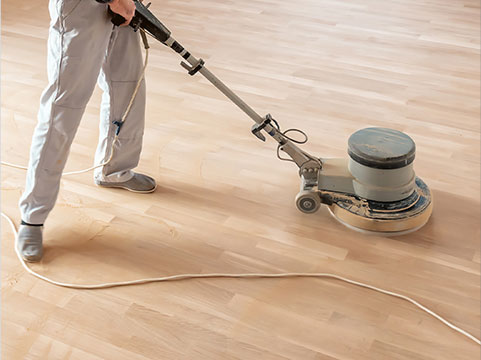
How Non Woven Grinding Discs Deliver Uniform Surface Finishes while Preserving Material Integrity
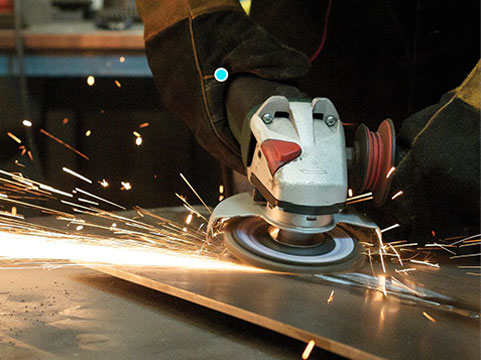
When Sandpaper Pads Fail: Understanding Common Causes of Poor Sanding Performance
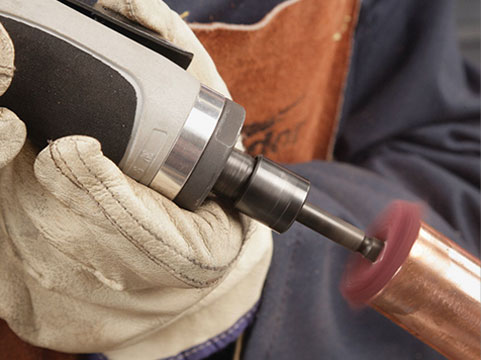
Avoiding Common Mistakes When Choosing and Using Steel Wool Abrasives for Surface Finishing
 EN
EN
 ko
ko  fr
fr  de
de  es
es  it
it  ru
ru  vi
vi  th
th  pl
pl  pt
pt